Introduction
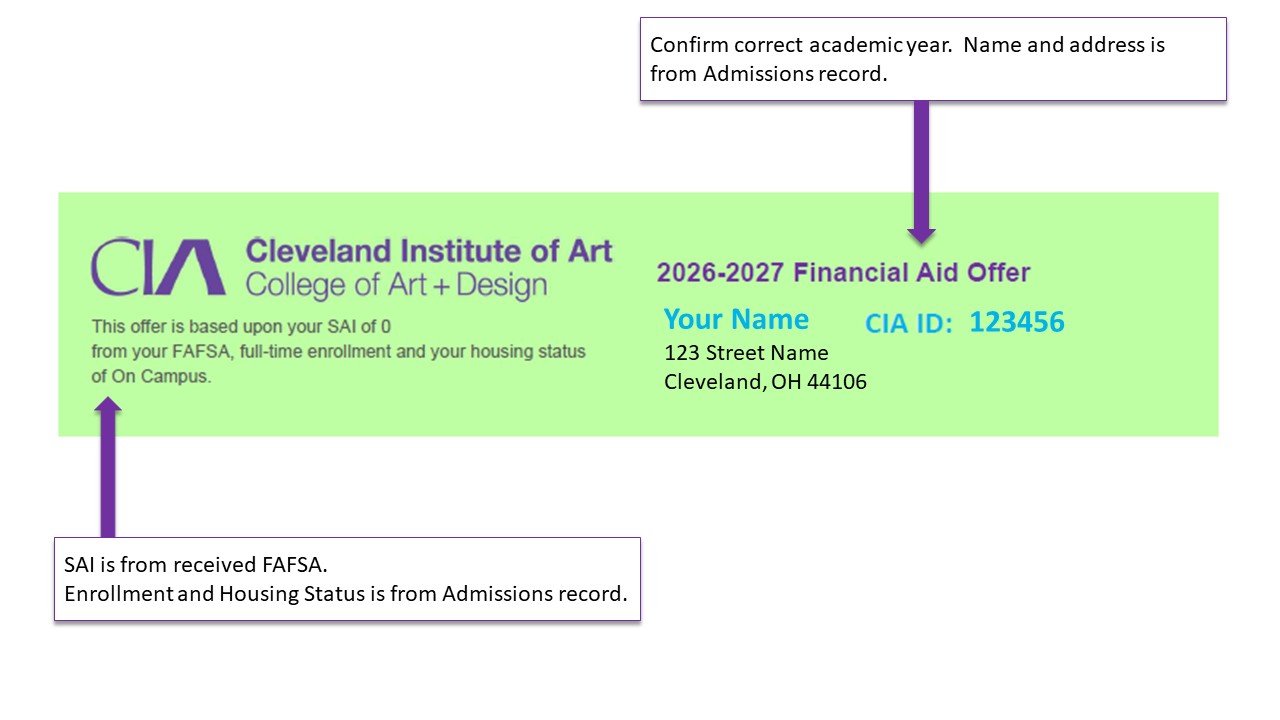
Your Eligibility for Financial Aid
COA - SAI = Need
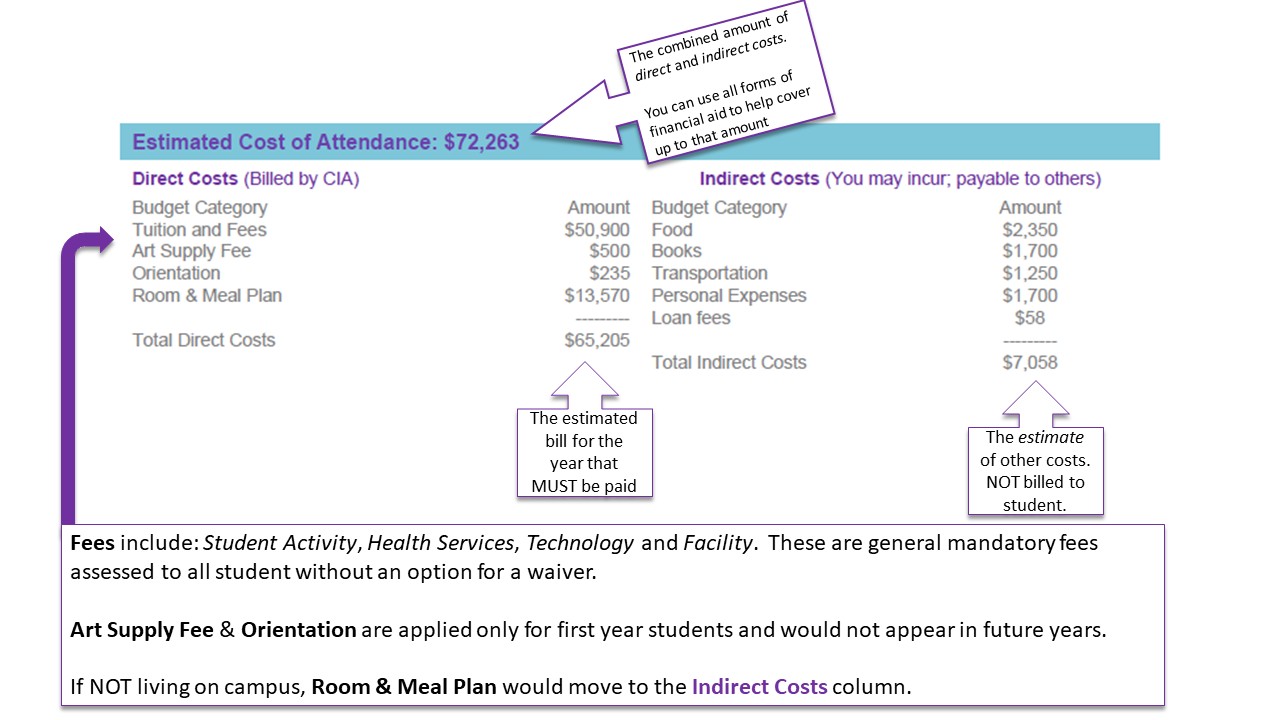
Cost of Attendance (COA)
The COA is made up of direct and indirect costs:
Direct costs (known as Costs Payable to the school), generally include tuition, mandatory fees, housing, and meals/food (for students residing on campus), health insurance (if minimum insurance coverage is not documented), or any other expenses paid to the school for enrollment. These costs are charged directly to your CIA student account.
Indirect costs (known as Costs paid to others), are other expenses not paid directly to the school, but associated with receiving an education. These expenses are estimated by CIA and may include books, course materials, supplies, equipment, transportation and parking, personal expenses, childcare costs, computer costs, disability expenses, licensure expenses and off-campus rent and food. These items are not charged to your CIA student account.
CIA's COA Breakdown
Student Aid Index (SAI)
The SAI is the eligibility index used to determine your eligibility for federal, and in some instances, state and institutional need-based student financial aid. The SAI calculation is determined based on a formula established by congress. Generally, students with a higher SAI are eligible for less need-based financial aid. It is based upon the information provided by the student and their family on the FAFSA.
It is calculated using a number of variables such as your dependency status, family size, income and assets reported.
More information on the SAI: https://studentaid.gov/help-center/answers/article/what-is-sai
Types of Aid On your Offer Letter
Below is a template example. Individual student aid award amounts will vary.
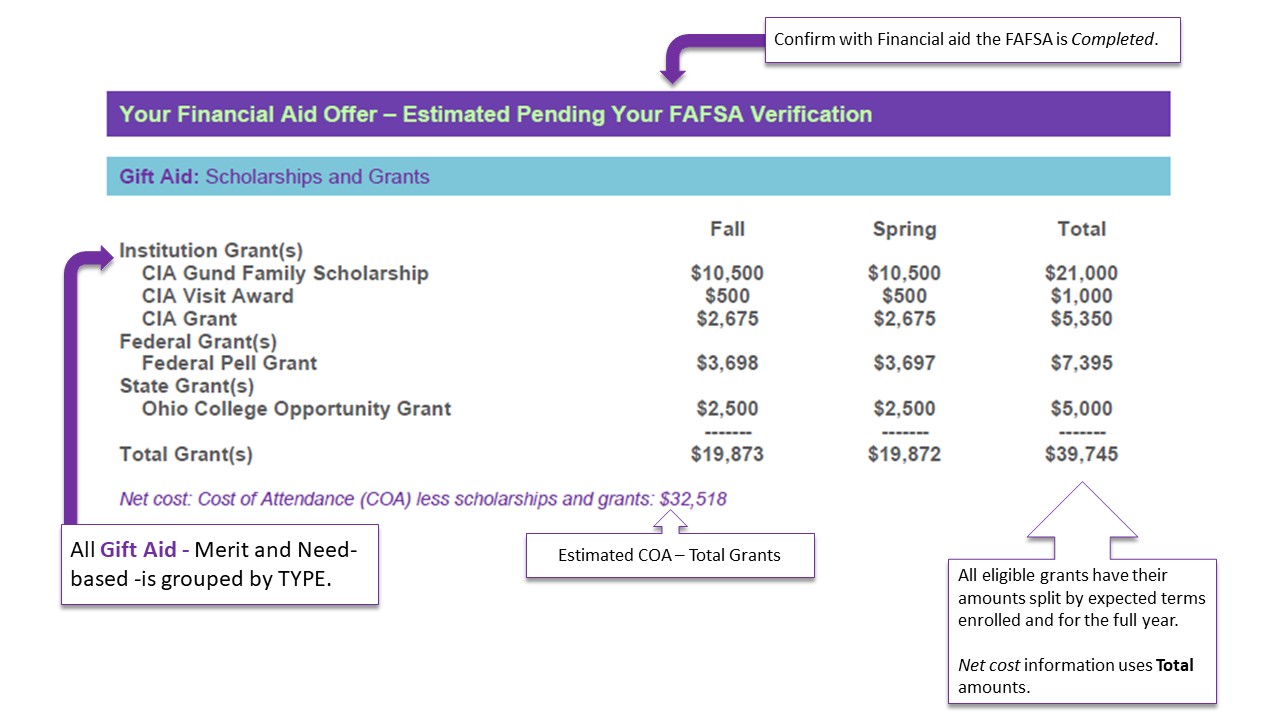
GIFT AID (Does not need to be repaid)
CIA Institutional Scholarships and Grants
These are awarded by the Cleveland Institute of Art to eligible entering students with exceptional talent, academic, and/or financial need.
CIA Merit Scholarships
Awarded to eligible entering students. Departmental and endowed scholarships are typically awarded to current, returning student by individual academic departments.
Merit scholarships are awarded on portfolio strength and academic achievements. These scholarships can be up to $30,000.
Federal & State Grants
Most federal & State grants are need-based and use the Free Application for Federal Student Aid (FAFSA) to determine eligibility. Like scholarships, grants may have GPA or enrollment requirements associated with them.
Federal Pell Grant
For undergraduate students who display exceptional financial need and working towards their first a bachelor's degree. The amount you get, though, will depend on
your Student Aid Index (based on your FAFSA form)
the cost of attendance (determined by your school for your specific program)
your status as a full-time or part-time student
your plans to attend school for a full academic year or less
the type and length of your academic program
your remaining Pell eligibility under your Pell lifetime eligibility used (LEU) amount
Federal Supplemental Educational Opportunity Grant (FSEOG)
This is limited funding to Pell Grant-eligible undergraduate students who demonstrate exceptional financial need to help pay for their education, based on FAFSA data and does not need to be repaid.
State Grants - Ohio Residents
The Ohio College Opportunity Grant (OCOG) program is the most common state grant. It is for Ohio residents, attending state institutions, working towards their first bachelor’s degree, that show high financial need. To be eligible, Ohio students must have filed a FAFSA and have an SAI (Student Aid Index) of $3,750 or less and a maximum household income of $96,000.
Amounts, based on yearly enrollment:
| Full Time | 3/4 Time | Half-Time | Less than Half-Time |
| $5,000 | $3,750 | $2,500 | $1,250 |
Other State Grants & Offerings
Other states, including Vermont, and Pennsylvania permit their state grants to be used at out-of-state schools, including CIA.
Rhode Island offers a low-interest non-federal educational loan for its residents.
Confirm with your state's Department of Higher Education.
Tuition Exchange
Tuition Exchange scholarships are available to first-year students applying for Fall admission and who are family members of employees from Tuition Exchange member colleges. The home institution of the employee receiving the benefit determines eligibility to apply. Approximately 10% of applicants are offered a Tuition Exchange award by CIA each year.
This benefit is only available for full-time undergraduate study in one of the majors offered within the Bachelor of Fine Arts degree. Continuing students who do not receive the award can apply for subsequent years, but will only be considered if a continuing student spot becomes available. Tuition Exchange Scholarships are not guaranteed awards and are awarded based on availability as well as artistic and academic merit.
Self-Help Aid
Below is a template example. Individual student aid loan amounts will vary.
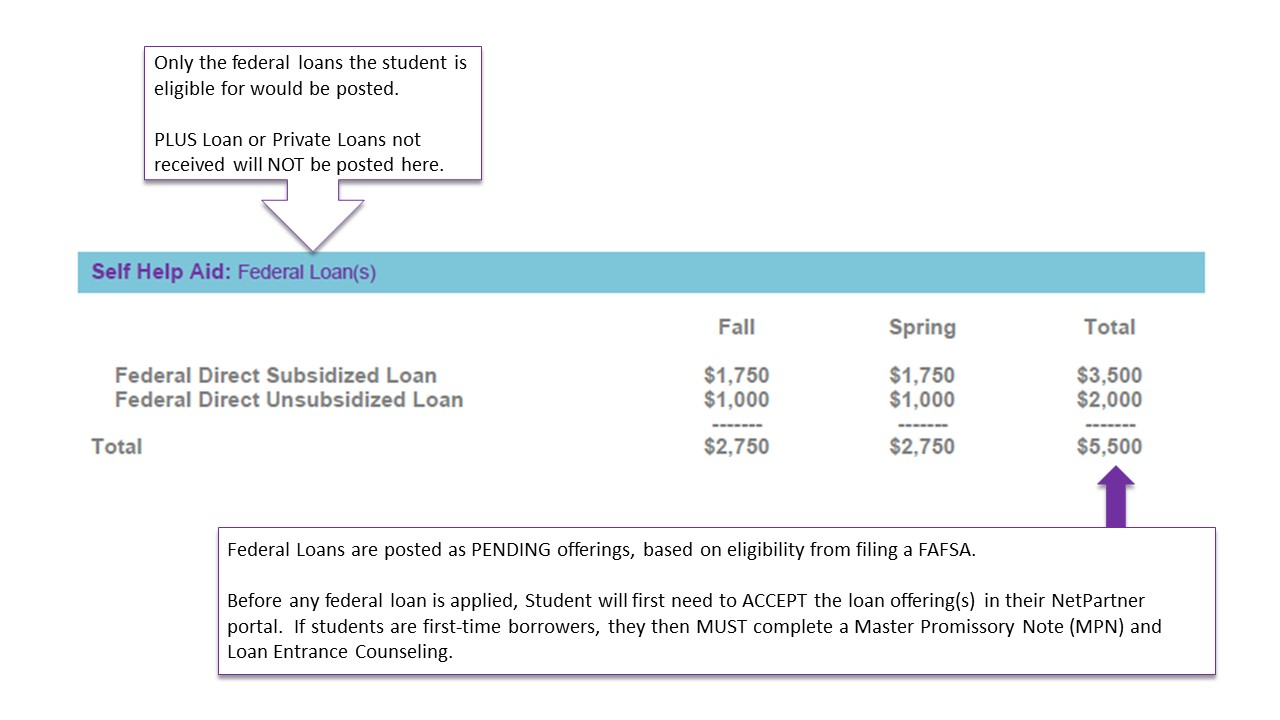
Federal Loans
Direct Subsidized Loans and Direct Unsubsidized Loans are federal student loans offered by the U.S. Department of Education (ED) to help eligible students cover the cost of higher education. These loans must be repaid and come with a fixed interest rate. (You might see Direct Subsidized Loans and Direct Unsubsidized Loans referred to as Stafford Loans or Direct Stafford Loans, but these aren’t the official loan names.)
The school will first apply your loan funds to your school account to pay for tuition, fees, room and board, and other school charges. If any additional loan funds remain, they will be returned to you.
After you graduate, leave school, or drop below half-time enrollment, you will have a six (6) month grace period before you are required to begin repayment. During this period, you'll receive repayment information from your loan servicer, and you'll be notified of your first payment due date.
Borrowing Limits
| Dependent Undergraduate Students | Direct Subsidized Loans | Direct Unsubsidized Loans | Annual Limit |
| First Year Total | $3,500 | $2,000 | $5,500 |
| Second Year Total | $4,500 | $2,000 | $6,500 |
| Third Year & Beyond (Total Each Year) | $5,500 | $2,000 | $7,500 |
| Independent Undergraduate Students | Direct Subsidized Loans | Direct Unsubsidized Loans | Annual Limit |
| First Year Total | $3,500 | $6,000 | $9,500 |
| Second Year Total | $4,500 | $6,000 | $10,500 |
| Third Year & Beyond (Total Each Year) | $5,500 | $7,000 | $12,500 |
Federal Direct Subsidized Loan
Direct Subsidized Loans are available to undergraduate students with financial need.
The financial aid office determines the amount you can borrow, and the amount may not exceed your financial need.
The U.S. Department of Education pays the interest on a Direct Subsidized Loan...
while you’re in school at least half-time,
for the first six (6) months after you leave school (grace period),
during a period of deferment (a postponement of loan payments).
Federal Direct Unsubsidized Loan
Direct Unsubsidized Loans are available to undergraduate, graduate, and professional students; there is no requirement to demonstrate financial need.
The financial aid office determines the amount you can borrow based on your cost of attendance and other financial aid you receive.
First-Time Borrowers
If you accepted your federal loan(s) you must complete the...
Loan Entrance Counseling at https://studentaid.gov/entrance-counseling/
AND
Master Promissory Note at https://studentaid.gov/mpn
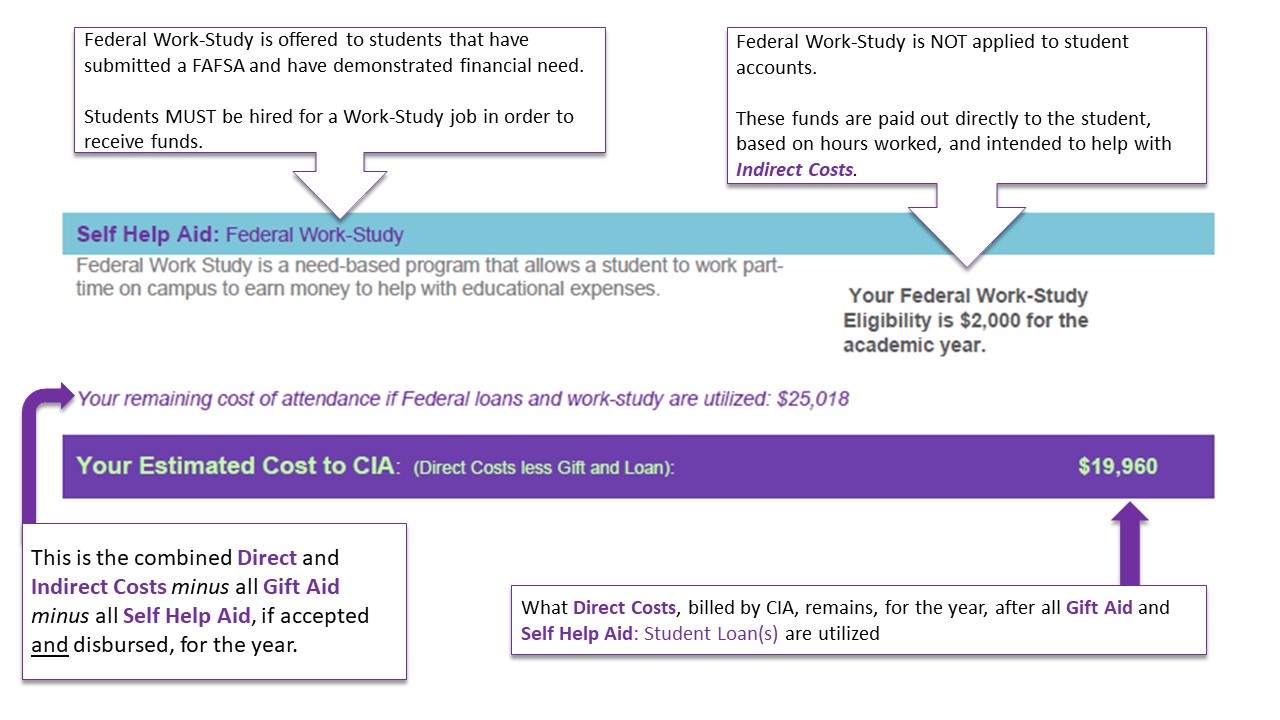
Federal Work-Study
The Federal Work-Study program allow students to earn money by working a part-time job on campus or at approved off-campus sites.
The program is need-based and eligibility is determined by information reported on the submitted FAFSA. Students are paid monthly by direct deposit.
Review and Accept Your Financial Aid Offer
Optional Fees
Every year, there are some charges posted that students can opt-out of to reduce their overall bill.
CWRU Medical Plan Waiver
All students are required to have health insurance. You will automatically be billed for the CWRU Medical plan for an estimated $2,110 each semester. If you have health insurance, you will waive the CWRU Medical plan charge by going to MyCIA - Student Accounts homepage. You will need a copy of your insurance card.
Long form URL: https://my.cia.edu/ICS/Student/Student_Services/CWRU_Medical_Plan_Waiver_Form.jnz
Laptop Assessment
Students are required to have a laptop that meets specifications for their major. Information can be found on MyCIA in the Technology Department section. CIA has a Rent-to-Own Laptop program that can assist you in obtaining the necessary laptop. You will automatically be enrolled in this program.